Legislative Update
(July 17, 2009) - S.B. 1350, which threatened to substantially raise the affordable housing requirement on development in Kaka`ako, was vetoed by Governor Linda Lingle.
State senators opted not to override the governor’s veto in a one-day special session, effectively killing the bill.
What happens next?
This past Legislative session was the starting point for good discussion on a statewide affordable housing policy. Kamehameha Schools is committed to the vision of Kaka`ako as a diverse, mixed-use neighborhood. We look forward to working together with lawmakers, residents, businesses, neighbors and others to draft affordable housing policy that is fair, flexible and effective.
Kamehameha Schools’ master plan application for Kaiāulu `o Kaka`ako continues to move through the Hawaii Community Development Authority’s review process. We expect a final decision by early October.
Stay tuned for updates on Kaiāulu `o Kaka`ako.
Kaka'ako Master Plan Update
(June 30, 2009) - SB1350, CD1, which forces reserved housing exactions on Kaka`ako development, cleared a major hurdle today toward a veto. This afternoon, Governor Linda Lingle included SB 1350 on a list of 65 bills she is considering for potential vetoes.
Governor Lingle now has until July 15th to take action on the bills listed. If the governor does not sign or veto a bill, it becomes law without her signature. If the Legislature plans to override a bill, it must do so before noon on July 15th.
Kamehameha Schools, together with other small and large landowners in Kaka`ako, strongly supports a veto of SB 1350. We believe this bill causes immediate harm – to Kaiāulu o Kaka`ako as well as the Hawai`i economy – and can only rectified by a veto. As enacted by the Legislature, SB 1350 imposes an immediate moratorium on building permits, subdivision approvals, base zone permits and planned development permits until the Hawaii Community Development Authority establishes new rules. The bill allows HCDA until January 2010 to do this.
In addition, SB 1350 significantly impacts all Kaka`ako landowners with properties larger than 20,000 square feet by using a broad definition for “development.” Any property owner wishing to expand, renovate or change the use of a structure on his land will need to build a proportionate amount of reserved housing. This is contrary to a recent letter to the editor published in the Honolulu Advertiser which erroneously stated the rules do not apply if construction does not exceed 45 feet in height or more than 1.5 times the land area in density. In fact, SB 1350 will impact projects of ALL sizes.
In the next 15 days, Governor Lingle will decide what final action to take on SB 1350. We encourage you to write the governor and your lawmakers and urge them to support a veto of SB 1350.
Governor Lingle can be reached at:
Email: governor.lingle@hawaii.gov or gov.policy@hawaii.gov
Fax: (808) 586-0006
For more information on SB 1350, e-mail Erin Kinney of Kamehameha Schools’ Community Relations & Communications office at erkinney@ksbe.edu.
Kaka'ako Master Plan Review Process
Kamehameha Schools’ master plan application for Kaiāulu ‘o Kaka’ako is now moving through the 200-day review process by the Hawai’i Community Development Authority (HCDA).
In early July, a contested case hearing will be conducted by the HCDA. A decision on Kaiāulu ‘o Kaka’ako is expected in October.
SB 1350, CD1 – Harmful to Kaiāulu ‘o Kaka’ako as well as other Kaka’ako landowners
The more immediate threat to Kaiāulu ‘o Kaka’ako and other development in Kaka’ako is SB 1350, CD1, which substantially increases the reserved housing requirement for Kaka’ako. The measure was approved by lawmakers this legislative session and is now awaiting Governor Lingle’s signature.
SB 1350, CD1 significantly increases the amount of reserved housing developers and landowners are required to build as a condition of both new development and construction on existing structures. The bill ties exactions to both residential and commercial floor space – a revision that negatively impacts small landowners while also making development financially unfeasible for larger landowners.
The bill was recently featured on the front page of the Sunday, June 7th Honolulu Advertiser. Kamehameha Schools has been frank about its desire to have this bill vetoed, not only for its implications for Kaiāulu `o Kaka`ako, but also because of the immediate harm the bill has on KS tenants, neighbors and the economy.
See comments by concerned landowners recently featured in the Honolulu Advertiser.
Editorial: Kaka'ako - Keep politicians out of free market
http://tinyurl.com/mp9bno
Bill unfairly restricts Kaka'ako properties
http://tinyurl.com/m3bt9x
Governor Lingle has until June 30th to signal her intent to veto. If you are interested in learning more about SB 1350, CD1 or want to know how you can voice your objections to the bill, please contact Erin Kinney at erkinney@ksbe.edu.
Link:
SB 1350 Frequently Asked Questions
Complete SB 1350 (25 pages)
Kaka'ako Master Plan Receives Overwhelming Support

(May 8, 2009) The public got its first opportunity yesterday to comment on a plan by Kamehameha Schools to redevelop 29 acres of land in Kaka'ako, and the project received near-unanimous support by the more than 40 people who testified.
Media Links:
* The Honolulu Advertiser - Kaka'ako development plan gets good 1st review
* KITV - Kamehameha Schools Moves On With Kakaako Plan
What They're Saying...
“The location of this proposed community within walking distance of high tech facilities makes the approval of the master plan even more compelling to parents, like me, with children reaching their early twenties who would like to return home from college with realistic opportunities for jobs in their chosen careers and the ability to obtain affordable housing close to those jobs.”
- - -
“It achieves a balance of residential, commercial and open space development while still maintaining the sense of place that distinguishes this unique area of Honolulu.”
- - -
“Being that Hawaii is blessed with warm, tropical weather, it makes sense to create a walking/biking community where people can gather, live, shop, dine and work.”
- - -
“KS is committed to be careful stewards of Kaka`ako, who will optimize the land use, rather than maximize it, and has solicited input from community groups, residents, tenants, businesses and other stakeholders and has committed to continue to do so.”
Kaka'ako Walking Tour
Take a tour of Kaka'ako from Kekoa Paulsen.
Kaka'ako Walking Tour (Part 2)
In this second part of the walking tour, Kekoa Paulsen gives us an idea of the improved site lines looking mauka.
Kaka'ako Walking Tour (Part 3)
In this segment, Kekoa Paulsen explains Kamehameha Schools' plans on the Asia Pacific Innovation Center.
HCDA Community Meeting Planned
Posted: 4.14.2009
As part of its review process, the Hawai`i Community Development Authority is holding a community meeting on the Kaiāulu `o Kaka`ako Master Plan.
Thursday, May 7, 2009
4:30 – 7:30 p.m.
Honolulu Design Center
Cupola Theatre
1250 Kapi‘olani Boulevard
Free parking available in the Honolulu Design Center parking garage
The public is invited to provide comments on the master plan. We would greatly appreciate your support. Click here to contact us.
Kaiaulu ‘o Kaka‘ako Master Plan (KKMP)

Rich in history and rooted in legacy, Kamehameha Schools’ Kaka‘ako lands hold great promise for Honolulu and the entire state. Adjacent to the John A. Burns School of Medicine makai of Ala Moana Boulevard and the proposed rail transit route mauka, the schools’ Kaka‘ako holdings are well positioned to act as a catalyst for a 21st-century community — one that lures our young people back home and connects them to living-wage jobs in a new economy, supports educational opportunities in innovation technology and stands as a model of healthy and sustainable living.
Kaiāulu ‘o Kaka‘ako, on Kamehameha’s 29 mauka acres, will be a true neighborhood. It will build upon what is already in place, with a variety of housing at a range of prices, and shops, restaurants and gathering places that sustain its residents and align us with the Native Hawaiian culture. A dynamic, evolving neighborhood that embraces Kamehameha’s educational mission and kuleana for land stewardship, it will be at once familiar and new, comfortable and cutting-edge.
Vision for Kamehameha Schools’ Kaka‘ako Lands
Kamehameha Schools recognizes its Kaka‘ako landholdings are a crucial part of the continuing evolution of an area of major importance to the greater Honolulu community and the future of urban Honolulu.
Planning is already underway on its makai lands for an innovation technologies facility, located behind the former Gold Bond Building at 677 Ala Moana Boulevard. Complementing the state’s initiatives with JABSOM and the cancer research center, the innovation technologies facility will be a place where bright ideas develop into new industries, creating more than 1,200 high- and living-wage jobs for the area’s residents. The center will encompass specific education elements, including the commitment of 10,000 square feet to house a program that will prepare the youth of Hawai‘i for advancement in emerging fields in life sciences, biosciences, high technology, renewable energy research, marine sciences and more.
Kaiāulu ‘o Kaka‘ako on the mauka lands will support this budding industry by becoming a vibrant neighborhood where kama‘āina can work in meaningful careers, enjoy a variety of housing options, participate in cultural and community events, and connect to the ocean and other unique areas within urban Honolulu. This vision embraces three principal foundations:
1) Roots and Wings.
The concept of “Roots and Wings” speaks to recognizing and honoring the multi-cultural roots of the Kaka‘ako lands of Kamehameha Schools while launching into a dynamic future. Roots reflects the strength of our origins: a place local in character, but global in outlook; a place that expresses Kamehameha Schools’ legacy of education where people who have left can return. Wings reflects the realization of our ambitions: to create a new, enlightened model of community that empowers the people of Hawai‘i to aspire, and enables forward-thinking solutions.
2) The Neighborhood as an Urban Village.
Kaka‘ako presents the opportunity for a 21st-century mixed-use neighborhood where kama‘āina can come together in a community that recognizes their common interests and reflects their diversity. This community will be integrated into the surrounding community, with a safe, vibrant street life, pedestrian walkways and connections to public transportation. It is a community where young innovators can meet, dream and perhaps even create the next “big idea.”
3) Stewardship of the Land.
Our vision is that Kaka‘ako be developed on the foundations of cultural heritage, stewardship of the land, environmental sensibility, educational opportunities, and economic viability. Kaiāulu ‘o Kaka‘ako will be a place that respects traditional Hawaiian ways of life, celebrates the natural environment, utilizes sustainable land development and building practices and supports a new economy.
Educational Achievements and Opportunities

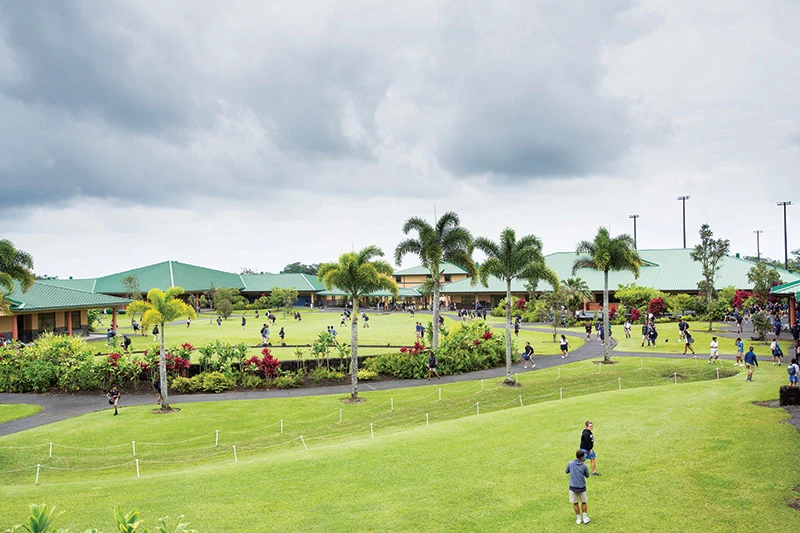
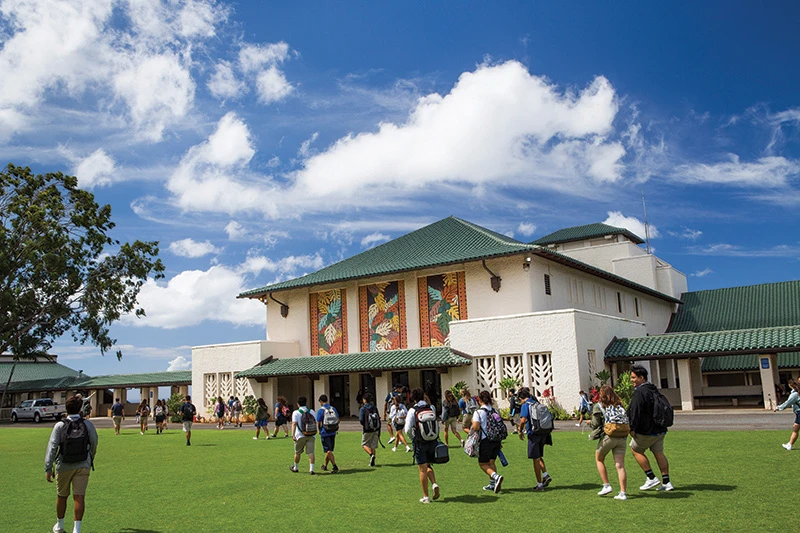
The Kamehameha School for Boys opened in 1887. Since then, Kamehameha Schools has graduated more than 20,000 young men and women. Every year Kamehameha’s three campuses graduate 700 students, many of whom will become future leaders. However, recognizing that the campus programs can accommodate only a fraction of the Native Hawaiian keiki Pauahi intended to serve, Kamehameha has also developed a comprehensive strategy to build capacity and commitment to education in the Native Hawaiian community. This strategy begins as soon as the babies are born, by teaching parents to recognize and nurture learning in their keiki. It continues with preschool and kindergarten readiness programs and follows the children through the public school system, providing literacy instructional support and mentoring. Kamehameha’s outreach strategy includes supplemental funding for charter schools that offer a Hawaiian-focused curriculum and post-high scholarships for college-bound graduates, as well as Mālama ‘Aina and ‘Aina Ulu programs for eco-cultural and stewardship initiatives. The financial commitment to these efforts is substantial. In the fiscal year ending June 30, 2008 alone, Kamehameha Schools spent $273 million on its educational mission — $82 million of which supported its community outreach and scholarships.
Kamehameha Schools Founding and Mission
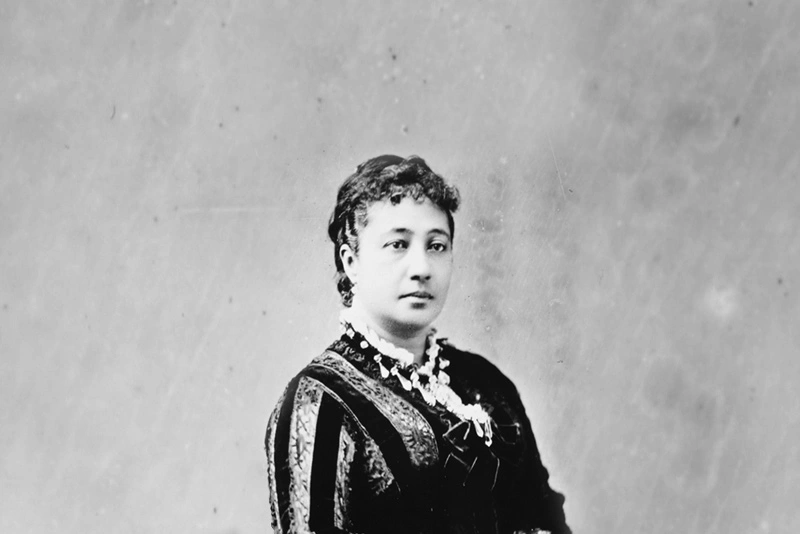
Kamehameha Schools was founded by the will of Bernice Pauahi Bishop, great-granddaughter and last direct descendant of Kamehameha the Great. In her lifetime, Pauahi had witnessed her peoples’ steady and catastrophic loss of stature. New systems of private land ownership, trade and commerce had changed the society. Native Hawaiians were marginalized in their own homeland, and were losing their land, language and cultural identity. Understanding that education was the key to her peoples’ salvation, Pauahi left her entire estate — more than 350,000 acres of land — for the establishment and perpetual operation of the Kamehameha Schools. At the first ceremony marking the founding of Kamehameha Schools, Charles Reed Bishop elaborated on his wife’s intent:
“Her heart was heavy when she saw the rapid diminution of the Hawaiian people going on decade after decade and felt it was largely the result of their ignorance...
“And so, in order that her own people might have the opportunity for fitting themselves for such competition, and be able to hold their own in a manly and friendly way, without asking any favors which they were not likely to receive, these schools were provided for, in which Hawaiians have the preference, and which she hoped they would value and take the advantages of as fully as possible.”